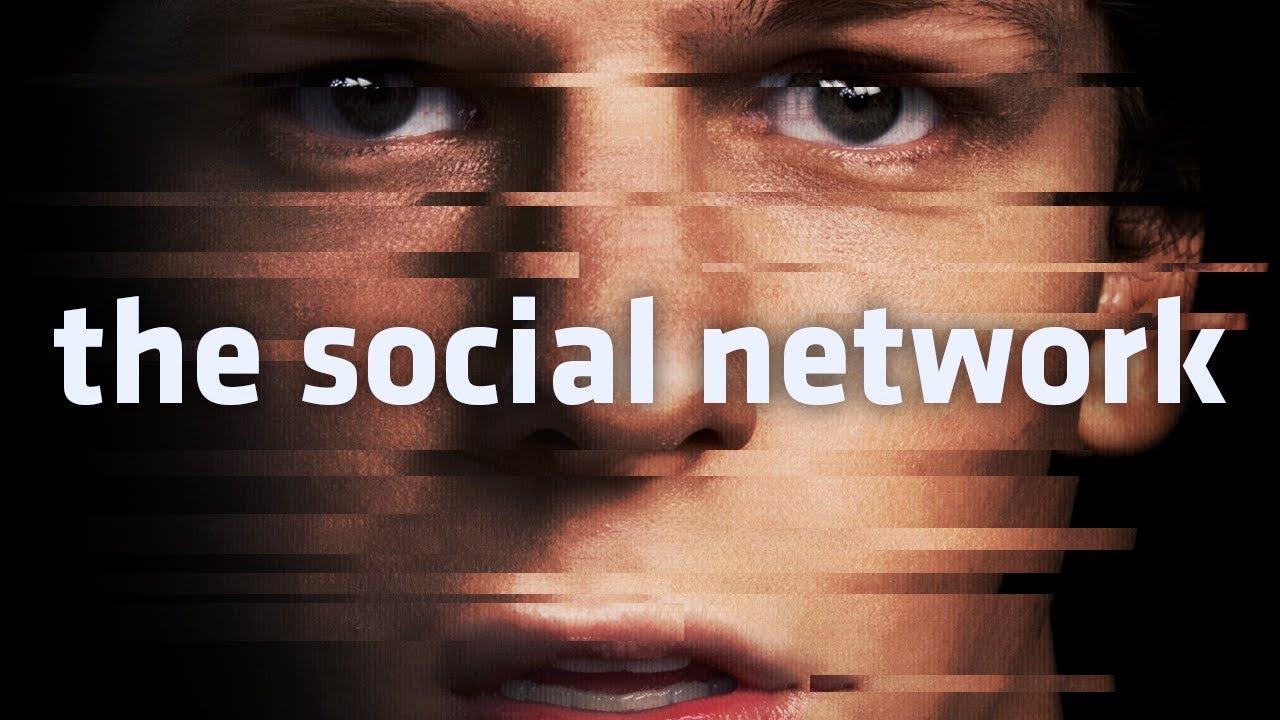
Who will change the world?
Who will change the world? Is it the "Old Money" sitting in the Porcellian Club, sipping scotch in bespoke suits? Is it the socially awkward geniuses who only know how to talk to screens? Or is it someone else?
I give The Social Network a 9/10 not because it's a faithful biopic of Facebook—the real Zuckerberg is far more boring and secular than the one on screen. What Fincher and Sorkin created is an epic war between the New and the Old, the Fast and the Slow, the East Coast and the West Coast. It is a story of how a visionary rides the tidal wave of an era. But more importantly, it is a tragedy: a dragon slayer who, fueled by rage against the establishment, builds a new empire only to become the very dragon he once despised.
The Modern Gatsby
You think this is a feel-good story about a poor genius striking gold? No. It is the coldest exposure of class barriers.
Zuckerberg thought Harvard was the key. He thought his talent would pry open the heavy oak doors of the elite. But the doors remained shut, and the light leaking through the cracks was judgmental. This is the modern Gatsby story. It’s no longer about buying a mansion for love; it’s about building a digital empire for dignity.
As a Computer Engineering grad, I feel a physiological empathy for the Zuckerberg on screen.
I, too, have envied the so-called elite—the Winklevosses of the world. But when you get close, you see the arrogance in their bones. They wrap their ugliness in "tradition" and "gentlemanly conduct." They look at you not as a peer, but as high-end tech support.
In that moment, you hate them. You swear: Screw your Final Club. I’ll build my own. The best club in the world. A club you can’t get into even if you beg.
What is my weapon? Code. The Internet. Those old guys don’t understand what this era of moving bits means. While they row crew and discuss family trusts over brandy, I will use my hands, under the dim dorm lights, to forge my own scepter.
But is this new, rebellious era truly better? Sean Parker is the answer. He is the avatar of the new age: cool, young, stylish, fast-talking, paranoid, and chaotic. He is a prophecy of the world 20 years later—a world conquered by TikTok, fragmentation, and algorithms. Nothing is permanent. Everything is short-term. There is only traffic.
The King of Dialogue & The Tyrant of Visuals
It’s hard to imagine the chemical reaction between Aaron Sorkin, the "auditory" writer whose dialogue fires like a machine gun, and David Fincher, the "visual" tyrant who controls every pixel.
Trivia tells us Sorkin directed the "Face Mash" scene at the beginning—his directorial debut before the masterpiece The Trial of the Chicago 7. But Fincher is the one who haunts me.
When I think of Fincher, I think of a specific texture: sodium-vapor streetlights spilling onto wet, black asphalt. Cold, industrial, yet mesmerizingly sickly. But Fincher is more than static aesthetics; he controls the "tension string." He films conversations like action sequences.
Take the account freezing scene. Eduardo screaming on the phone, Zuckerberg arguing awkwardly with his girlfriend, all set against the backdrop of a burning scarf. The editing is suffocating. And the opening bar scene—99 takes. It wasn't just dialogue; it was a collision of dimensions. Every cut was a shift in power. That is mastery.
The Ghost Ship
The chemistry between Jesse Eisenberg and Andrew Garfield sparked an internet subculture—the "Ghost Ship." It proves how perfect the casting was.
You can't fake that dynamic. One is a genius who avoids eye contact with the world but opens up to you; the other is a guardian who offers warmth but gets stabbed in the back. When Eduardo smashes that laptop in the rain, he isn't just breaking hardware. He is breaking the part of Zuckerberg that was still human.
Hand Covers Bruise
The score deserves its own chapter. It is a match made in heaven between Fincher and Nine Inch Nails’ Trent Reznor & Atticus Ross. Considering their later Oscars and diverse work on Soul and Tron: Ares, their genius is undeniable.
If you love rock or electronic music, you understand the texture. The main theme, "Hand Covers Bruise," is the most fitting melody I’ve ever heard. Simple piano notes struggling to survive amidst a sea of low-frequency static and industrial noise.
It is implicitly angry. It is sad. It is thoroughly lonely. As the story progresses, that melody drifts away. Just like the ambition, the blood, and the innocence of youth. Under the logic of capitalism, no matter how brilliant your algorithm, you are trapped.
He won 500 million friends, but lost the only one that mattered.
Verdict
I first watched The Social Network in high school, seeing only the cool startup vibes. Now, as a graduate stepping into the adult world built by code, I realize it is a moving tragedy.
In the age of AI, we stand at the precipice of another era. We will see many more stories like this. Young coders, dissatisfied with the system, using AI to build their own clubs.
What is their future? Will they slay the dragon, or become it? Staring at the blinking cursor on my screen, perhaps I should ask: What is my future?
谁会改变世界?
谁会改变世界?是那些坐在哈佛Porcellian Club里、穿着定制西装的有权有势的老钱么?是那些只懂对着屏幕敲代码、不善言辞的木讷天才么?还是其他人?
给《社交网络》打出9分,是因为这并非一部单纯关于Facebook发家史的传记片——现实中的扎克伯格远比电影里无趣,也更世俗。Fincher和Sorkin联手打造的,是一部关于新与旧、快与慢、东岸与西岸战争的史诗。这是一部关于时代浪潮下,野心家如何乘风起飞的故事;更是一首关于不满现有体制剥削的少年,怀着一腔热血想要建立新体制,最终却成为自己曾憎恨的那种人的屠龙者悲歌。
当代盖茨比的故事
你以为这是一个天才穷小子的逆袭爽文吗?不,它是对阶级壁垒最冷酷的揭露。
扎克伯格以为凭着自己的才华考上哈佛,精英的大门就会向他敞开。然而事实是,大门紧锁,门缝里透出的光都带着审视。当代的盖茨比故事,不再是为了爱情买下一座豪宅,而是为了尊严构建一个数字帝国。
作为一个计算机工程毕业的学生,我对于片中的扎克伯格有着近乎生理性的共情。
我也曾羡慕那些所谓的精英,那些把持着话语权的老钱。可当你真的接触到他们——像 Winklevoss 兄弟那样的人,你才发现那种骨子里的傲慢。他们道貌岸然,利用父辈的权力和所谓的“绅士风度”,把自己的丑恶美化为传统和习俗。他们看你的眼神,仿佛你只是一个用来修电脑的高级技工。
那一刻,你对他们深恶痛绝。你在心里暗暗发誓:去他的Final Club,我要建立一个自己的Club,一个世界上最好的Club,一个你们求着我都进不来的Club。
我的武器是什么?代码。互联网。 那帮老家伙才不懂这个 bit 飞速流动的时代意味着什么。在他们还在划船、喝着白兰地谈论家族信托的时候,我要用我的双手,在宿舍昏暗的灯光下,敲击出属于我的权杖。
然而,这个新的、反叛的时代真的有那么美好吗?Sean Parker 的出现给出了答案。他是新时代的肉身化身:酷、年轻、时尚、语速飞快,充满了偏执与混乱。他就像是一个预言,预示了20年后的今天——这个被短视频、碎片化信息和算法攻占的世界。一切都是短期的,一切都是迅速变化的,没有永恒,只有流量。
聊天剧本之王与镜头控制之王
很难想象 Aaron Sorkin 这个把台词写得像机关枪一样的“听觉系”编剧,与 David Fincher 这个每一个像素都要精准控制的“视觉系”暴君,碰撞在一起会产生如此奇妙的化学反应。
根据花絮,影片开头,哈佛大学校园里,众人围观 Face Mash 的其中一场戏是Sorkin亲自执导的,这也是本部电影杀青前的最后一场戏。这是他第一次亲自导戏,后来他开始自己执导电影,拍出了《芝加哥七君子审判》这种佳作。
想起 Fincher 的电影,我脑海里总会浮现出一种特定的质感:那是漆黑的湿润柏油马路上,洒上了一层铅黄色街灯的画面。冷峻、工业、却又带着某种迷人的病态。但这只是刻板印象,Fincher的高明之处在于“弦”的控制。他不仅会拍静景,还能让每一场文戏都充满了动作片的张力。
印象最深的是 Eduardo 在加州冻结账户的那场戏。一边是他在电话里咆哮,另一边是扎克伯格和女友充满尴尬的争吵,背景里是那一抹触目惊心的燃烧的围巾。这种多重冲突的剪辑,让人喘不过气。
当然,还有开头那场拍了99遍的酒吧戏,那不是简单的对话,那是两个思维维度的碰撞,每一次接话都是一次攻防。每一个镜头的选择都代表着对话走向的变化。真正的大师,拍戏就是如此举重若轻。
天才的选角
Jesse Eisenberg 和 Andrew Garfield 之间那种说不清道不明的“朋友”关系,后来甚至衍生出了一种互联网亚文化——“幽灵船”,这足以见得选角是多么的精准。
那种化学反应是演不出来的。一个是眼神闪躲却唯独对你敞开心扉的天才,一个是温柔包容却最终被背刺的守护者。当Eduardo在雨夜里砸碎电脑的那一刻,碎掉的不仅仅是硬件,更是扎克伯格作为“人”的那一部分温度。
绝无仅有的配乐
我必须要给这部电影的配乐单独开一个章节。这是 Fincher 与 Nine Inch Nails 灵魂人物 Trent Reznor 及 Atticus Ross 的天作之合。很难想象这是两人第一给电影做配乐,不仅如此,他们后来给《Soul》以及《Tron: Ares》做的截然不同风格的配乐,以及数个奥斯卡最佳配乐奖,也反复证明了他们的绝对实力。
如果你也是摇滚和电子音乐迷,你会懂那种听感。《社交网络》的主题曲《Hand Covers Bruise》是我听过的最贴合电影主题的旋律。甚至不需要复杂的编曲,仅仅是那几个简单的钢琴音符,在一片嘈杂、类似电流干扰的低频噪音中艰难地响起。
那个旋律是隐隐愤怒的,是悲伤的,更是彻头彻尾孤独的。 随着故事的推进,那个旋律逐渐飘远。仿佛少年时期的热血、抱负、以及那一点点纯真的初心,都终将远去。在资本主义庞大的运行逻辑之下,无论你写出多么精妙的算法,无论你换什么样的新花样,你终究是被困在其中。
他赢得了5亿用户,却失去了唯一的朋友。
总结
第一次看《社交网络》时,我还只是个高中生,那时我只看到了创业的酷和成功。如今,大学毕业,真正踏入这个由代码和算法构建的成人世界后重看,我才惊觉这是一部如此动人的悲剧。
在AI如火如荼的当下,我们正站在另一个时代的风口。我们这一代人,又将见证许许多多像《社交网络》一样的故事上演。一个个懂技术的少年少女,不满于现在的体制,想要用AI、用新的技术栈创造自己的club。
他们的未来会怎样呢?是屠龙成功,还是终成恶龙?看着屏幕上那个不断闪烁的光标,或许,我也该问问,我的未来会怎样呢?