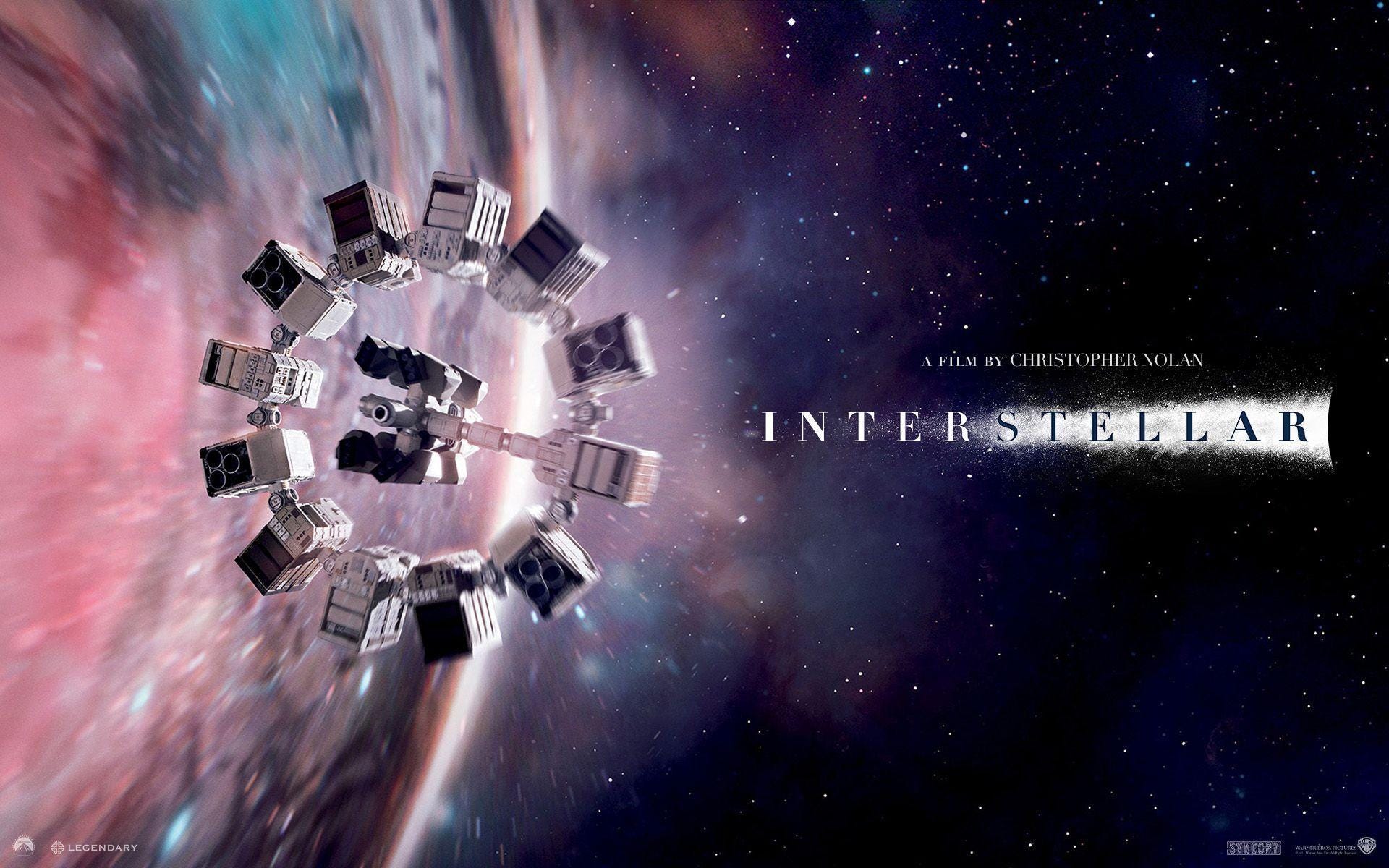
The Black Hole in My Mind
This film holds a singular significance for me.
My journey into sci-fi enlightenment was an interesting one: it started with Tron: Legacy, followed by Transformers, and then led to Interstellar. In a way, this progression defined the triad of elements I often weave into my own stories: cyberspace, robots, and the cosmos.
I hold Interstellar in particularly high regard because I witnessed its impact firsthand. I saw peers, who previously cared little for science, suddenly develop a yearning for the universe, relativity, and black holes. Can you imagine? Almost overnight, it seemed every high schooler was carrying a copy of A Brief History of Time, Relativity, or The Universe in a Nutshell.
It’s hard to imagine any medium other than cinema possessing such immense rallying power. It turned dry, boring formulas on blackboards into keys unlocking the stars. I imagine physics teachers that year were waking up from their dreams laughing.
Later, when reading Cixin Liu and other authors recount their own paths to sci-fi, they always mentioned how 2001: A Space Odyssey influenced them. By analogy, I believe Interstellar is our generation's "2001: A Space Odyssey."
This year marks the 10th anniversary of Interstellar, and it was my third time seeing it in a theater. It’s not hard to spot the narrative flaws in the third act, but I cannot separate my critique from my nostalgia. So, be warned: this review is heavily colored by emotion.
When Nolan Talks About Love, What Is He Talking About?
Christopher Nolan is notorious for his inability to write romance. People often joke that his male protagonists are always motivated by a "dead wife"—a trope so overused it has become a default background setting in his stories. Unfortunately, even in Interstellar, his most emotionally resonant film, Cooper is still a man who lost his wife.
But this doesn't stop Nolan from hiding the softest of hearts beneath a cold, hard sci-fi shell.
Many criticize Brand’s (Anne Hathaway) monologue about "love" on the spaceship, calling it the most unscientific, mystical moment of the film. As a STEM student, I cringed the first time I heard it, too. But when you understand five-dimensional space, and you understand that gravity can traverse time and space, you suddenly realize: If gravity can cross dimensions, why can't love?
In this movie, love is no longer just ephemeral dopamine. Nolan concretizes it into a physical quantity—a force that, like a gravitational wave, can cross millions of light-years, penetrate event horizons, and accurately strike a girl behind a bookshelf. That "ghost" was no one else; it was the father's obsession transcending time.
It was this obsession, transcending dimensions, that finally allowed a father—still young—to stand before his daughter, who had reached the end of her life. In that moment, the ticking of the watch was no longer just counting time; it was a promise that had spanned the ages, finally fulfilled.
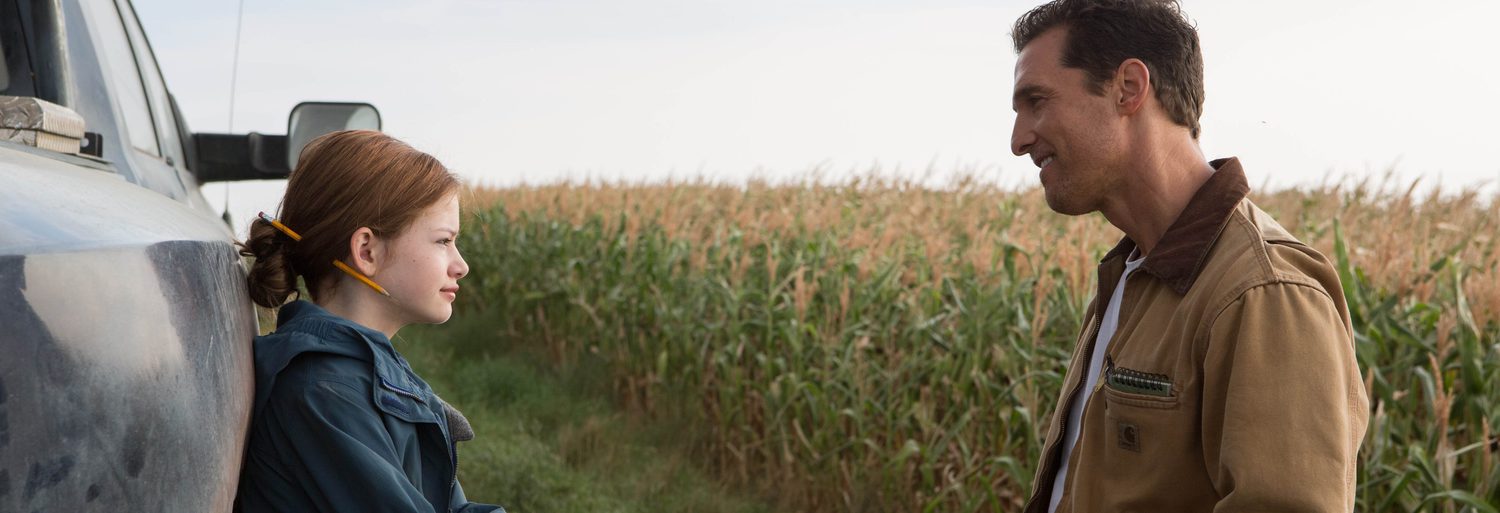 father and daughter
Space: The Final Frontier
Time. It is the concept Nolan loves to play with the most. In Interstellar, this concept merges perfectly with real physical laws. The most moving segments of the film all stem from the ruthlessness of time.
Remember Miller's Planet? That world of monstrous waves. In Hans Zimmer's score, there is a ticking sound like a second hand every second. Someone calculated that every second there equals a whole day on Earth.
When Cooper’s team returns to the ship, exhausted after a delay of just a few hours, the crewmate left behind, Romilly, has aged twenty-three years. Even more heartbreaking is the video archive accumulated over those twenty-three years. On the screen, Cooper’s son goes from a high school graduate to a father, to a grieving parent, and finally, to a man who gives up waiting. Decades of joy and sorrow are fast-forwarded into a few minutes in the father's eyes.
Matthew McConaughey delivers an Oscar-worthy performance in that scene. What is he crying for? Not just for the missed companionship, but from a visceral experience of the cruelest side of relativity—the universe merely blinked at him, but his human world had already turned to dust.
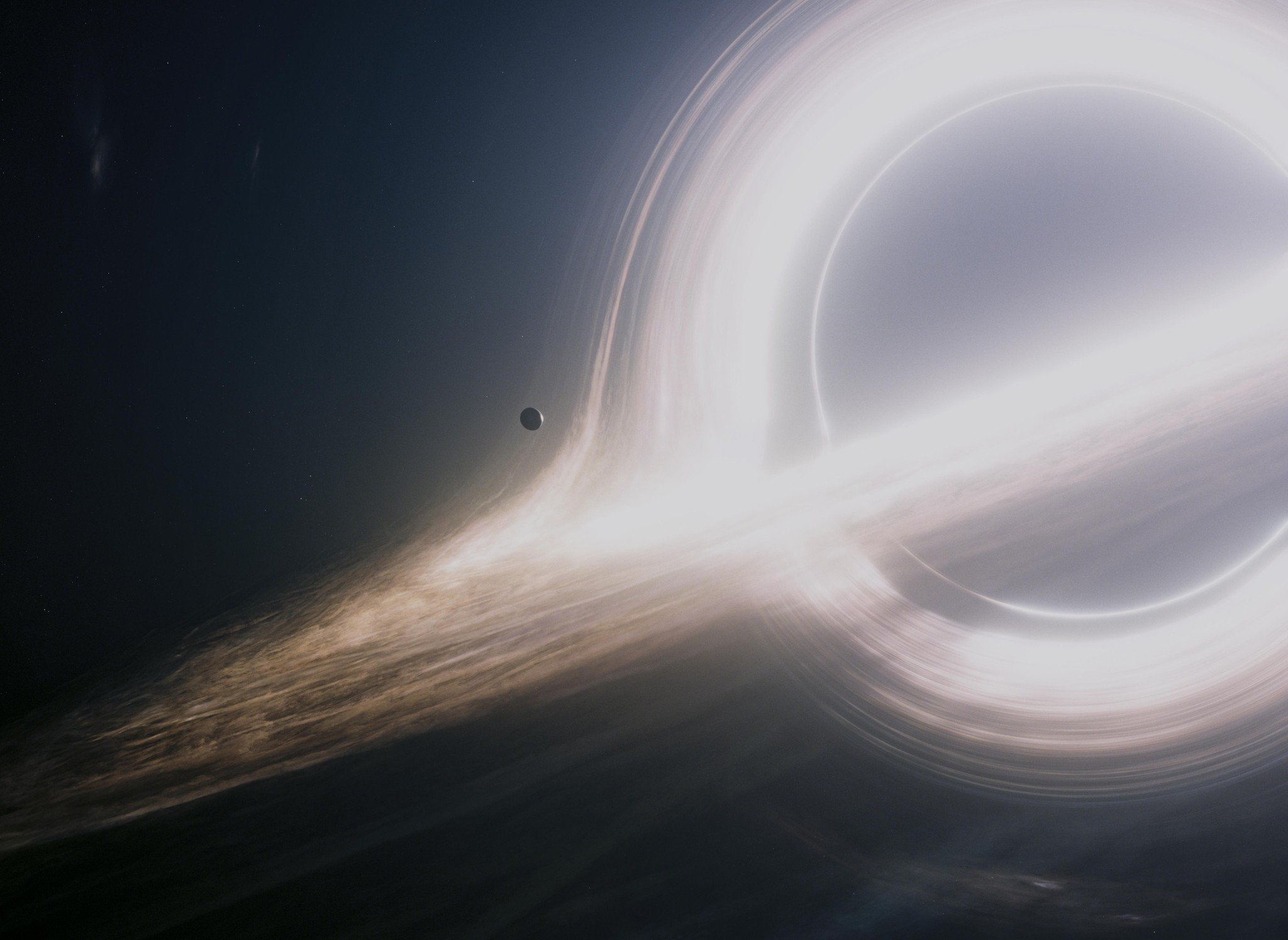 gargantua
This story always reminds me of the final two episodes of the Japanese OVA Gunbuster. In Gunbuster, the protagonists travel into deep space to save Earth. When they return, due to time dilation, centuries have passed. They don't know if humanity, or even life, still exists. However, as they approach Earth, lights suddenly illuminate the dark planet.
It turns out that while time ruthlessly stretched the distance to tens of thousands of years, human memory did not fade. When those lights spelled out "WELCOME HOME" (OKAERINASAI) across the globe, the cruelty of relativity and the warmth of humanity reached a miraculous reconciliation. Like Cooper's tears, this is the ultimate romance of science fiction.
90%
It’s strange. This is the line I remember most vividly. Upon rewatching, I said it almost in unison with Matthew McConaughey to Anne Hathaway: "90%." The sequence is etched in my mind: Dr. Mann's betrayal, the docking, the sacrifice, the plunge into the black hole—climax after climax.
The line is mesmerizing because it is a callback that spans the entire movie. At the beginning, Cooper asks the robot TARS what his honesty setting is. TARS says 90%, because for emotional creatures like humans, absolute honesty often means pain. Cooper laughs and says, "Okay, 90% then."
At the very end, near the accretion disk of Gargantua, Cooper decides to sacrifice himself, detaching his ship to provide the necessary thrust to send Brand to the third planet. When Brand panics and shouts, "You said we had enough resources for both of us!" Cooper calmly replies: "We agreed, Amelia. 90 percent."
In that moment, machine logic became the final human tenderness. He used a lie to ensure her survival.
Since we are talking about TARS, I have to talk about the two robots that stole the show—TARS and CASE.
In traditional sci-fi, robots are either clumsy tin men like C-3PO or terrifying androids like in The Terminator. But Nolan boldly removed all "humanoid" features, paying homage to the Monolith in 2001: A Space Odyssey by designing them as simple, black rectangular slabs.
At first, you wonder how these things move. Then, they split and rotate like a Swiss Army knife, or sprint through water like a cartwheel. The violent aesthetic of that mechanical design is breathtaking.
Even more interesting is their software. Nolan gave them adjustable parameters for "Humor" and "Honesty." This incredibly "Programmer Friendly" setting gave souls to these cold blocks of metal. TARS jokes about "self-destruct sequences" before launch and adjusts his humor level when Cooper is stressed.
This absolute, rational loyalty forms an ironic contrast with the unpredictability of humans.
When TARS unhesitatingly volunteers to plunge into the black hole to collect singularity data, Dr. Mann—the representative of Earth's elite, the "best of us"—attempts to kill his rescuer to survive a doomed fate.
This is Nolan's brilliance: in a film celebrating the spirit of exploration, the machine possesses the divine spark of humanity, while the greatest villain is not an alien, nor a black hole, but the primal, ugly survival instinct of a human stripped of civilization's veneer.
Verdict
Ten years ago, a middle school boy bought a midnight movie ticket. He went to the theater alone, unaware that the next two and a half hours would ignite a universe within him. This passion would accompany him like a higher-dimensional ghost, guiding him through his quiet yet turbulent adolescence.
In countless afternoons talking by the surging river, and countless nights scribbling on draft paper, he sought, he wandered, he struggled. At those times, he would always remember the silver, intoxicated faces illuminated by the screen in that dark theater—the most beautiful scenery in the world. He would remember flipping through film magazines in the school library, trying to understand how the world behind that screen worked.
Ideals are like black holes: they attract us, yet we can never truly get close. But time always passes slower near a black hole, just as ideals keep us young.
Thank you, Nolan. And thank you to every twist of fate that let me meet this film.