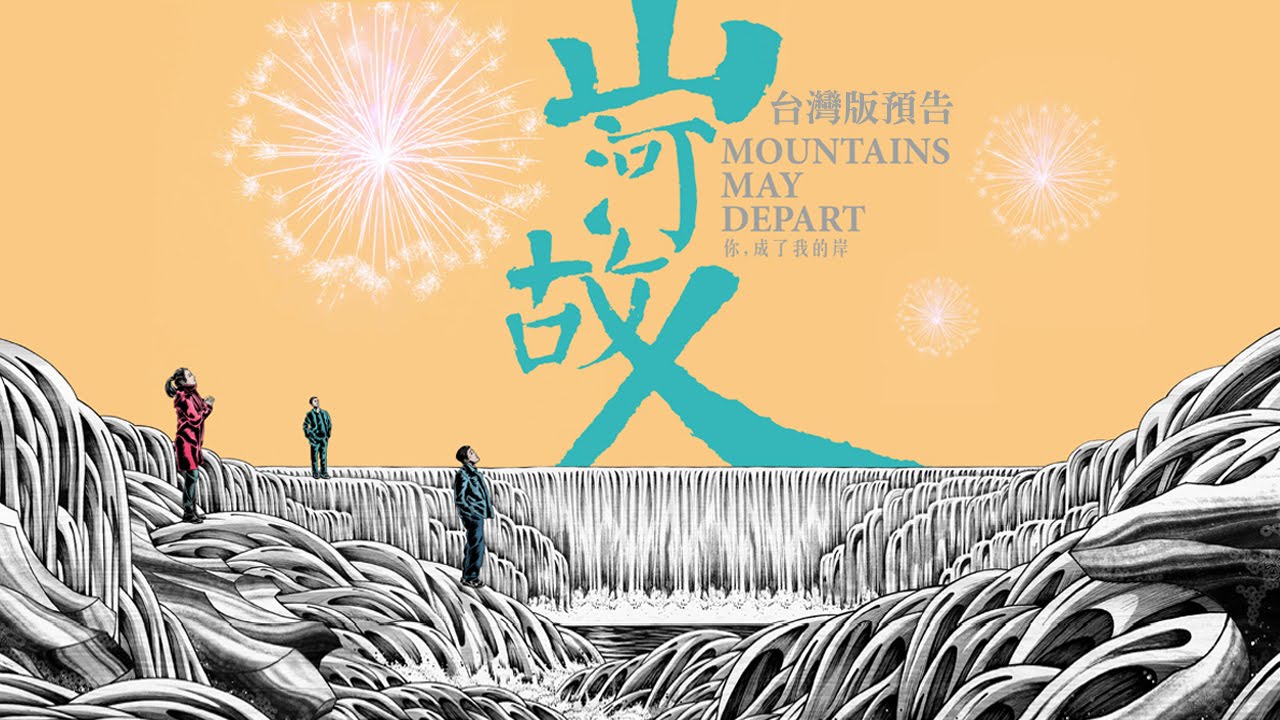
Mountains May Depart
For me, this film lands on three fairly big points of resonance: Dollar's experience studying abroad, Tao and Liangzi's relationship, and Tao and Dollar's relationship.
As for Zhang Jinsheng, he's more the type of person I actually run into in real life but can never quite empathize with — though his line, "freedom is bullshit," did strike a chord with me. Jia Zhangke is remarkably good at using a few plain, cutting lines to get both a point and a story across within the bounds of what's allowed, and that's something other Sixth Generation directors could learn from. Zhang Jinsheng's arc is a textbook example of it. If Wang Xiaoshuai or Lou Ye had directed this, it almost certainly wouldn't have cleared censorship.
I really love Mountains May Depart, because — I'm still not entirely sure why — going back home this Lunar New Year to see my high school friends, and one old friend in particular, felt like living out some combination of Liangzi and Zhang Dollar's stories from this film.
Once you've been working for a while, every film starts to feel like watching your own past, present, and future. It's an intoxicating feeling, and a heartbreaking one. Jia Zhangke is remarkably precise with how he opens and closes his shots in this film — the scene where the female lead's father dies, or the one where the teacher played by Sylvia Chang walks into Zhang Dollar's home — every closing frame carries the tension of its opening frame through to an answer that's unexpected yet somehow inevitable. It left a deep impression on me.
I keep thinking this would actually make a great film in its own right: a story with no real dramatic conflict, just a young person who's been away from home for years, using a Lunar New Year trip back to Chongqing as cover to sneak off somewhere else to see someone they once had feelings for. The two of them eat together, walk together, visit Baidi City, hike a mountain, take photos, even play on a seesaw in a small park like kids again, and finally hug goodbye before each returning to their own lives — one in Beijing, one in Toronto.
It has a bit of the Before Sunrise flavor — that wandering, talking quality — and it carries some of Mountains May Depart's own undertone about home, time, and the forks life takes. At the same time, it's full of the comedy that real life just naturally produces — like discovering her family's house has three floors and an elevator the first time I visited, her mom asking about my job and salary the moment we met, and right before we said goodbye, her mom's line: "You two have the purest friendship — just like sisters." It stamped the whole relationship with an absurd, almost official seal.
Without any clear romantic ending, it feels more like a brief reunion with youth, home, and an old friend — the kind of thing that lingers with you. Two people who once had feelings for each other never became a couple; they just crossed paths again years later, confirmed that they'd each ended up on a different life path, and said goodbye once more.
If Liangzi and Tao's reunion is about saying goodbye to youth and old friends, then the separation between Tao and Dollar brought up something even more personal for me — a memory about my own mother.
I've always thought of my mom as a strong person, someone who isn't very good at expressing her feelings. Once, as a kid, I saved up money to buy her flowers for Mother's Day. She was clearly happy, but what she told me was: don't waste money like that next time. Later, after I left home to go to university in Canada, she'd often go quiet on me too — she wouldn't call first, and when we did talk, she'd only ask about eating, sleeping, and work, never touching on anything bigger. It was always my dad who'd actually reach out to chat. I couldn't help comparing her to other people's parents: theirs would call proactively, always find some way to help, always have useful information to offer, and it left me feeling a bit off inside.
It took me a while to understand — she felt that before I turned eighteen, she'd been the one by my side the whole time, handling every part of my daily life, and it had taken up too much of her time, while my dad had been mostly absent through my childhood. So now, she felt, it was his turn to be the one looking after me. For a while I took that as something close to a deliberate, cold letting-go. But later I found out she'd actually been keeping a diary all along, and in it, she'd written down what she really felt the day I left home — of course she didn't want to let me go, but she also believed I needed to go out and grow on my own. These years haven't been easy for her either; she and my dad moved to a new city, started over in a new work environment. She's the type who can't sleep well the moment she's in a different bed, someone whose mind is always crowded with things to worry about. I understand now — those are habits left over from the years she raised me alone. And because of that, I understand something else too: that some part of her probably wishes I'd talk to her more about the things she keeps to herself.
When I saw Tao in the film, going out of her way to take the slowest possible train so she could see her son off, that memory came rushing back all at once.
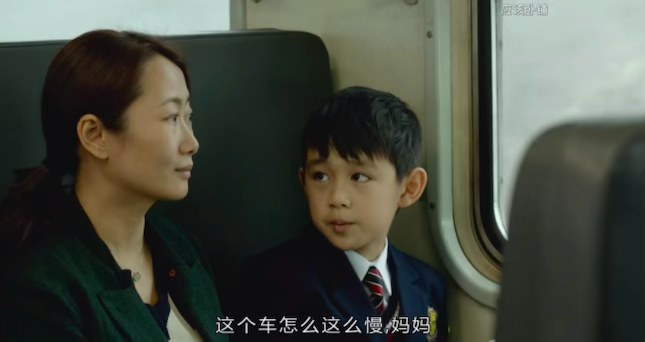 This train is so slow, Mom
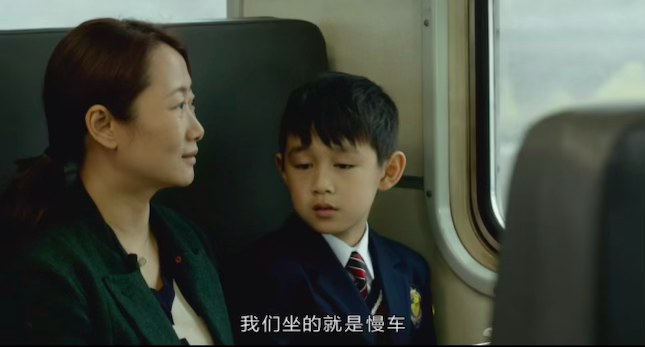 We're on the slow train on purpose
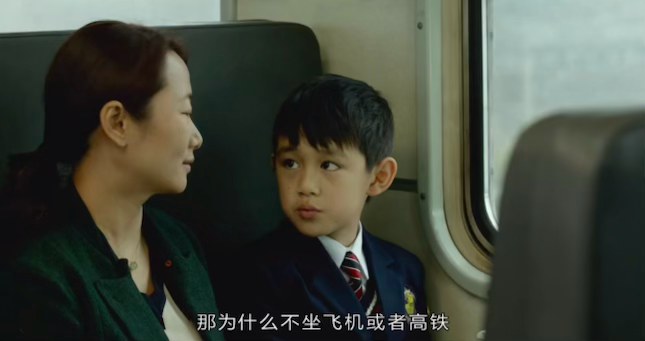 Then why didn't we fly, or take the high-speed rail?
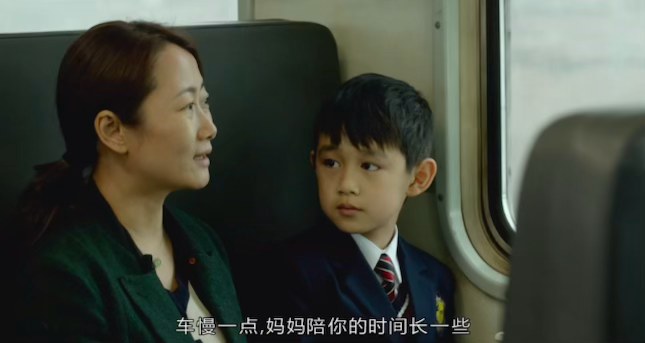 The slower the train, the longer I get to be with you
At the very end of the film, Dollar, staring out at the ocean, seems to finally remember his mother's name, and calls out "Tao." The scene cuts to Tao, on the other side of the world, finishing a pot of wheat-ear dumplings, then walking out alone into the snow. To Pet Shop Boys' "Go West," she dances alone — the same dance she used to do when she was young. It reminded me of the closing dance in Bong Joon-ho's Mother — a mother, a dance, both times so beautiful it's hard to find words, and both times heavy with meaning.
Everyone eventually scatters — the mountains and rivers stay, the old friends don't. In the end, it seems like there always has to be someone who stays behind, holding on to that stretch of home.