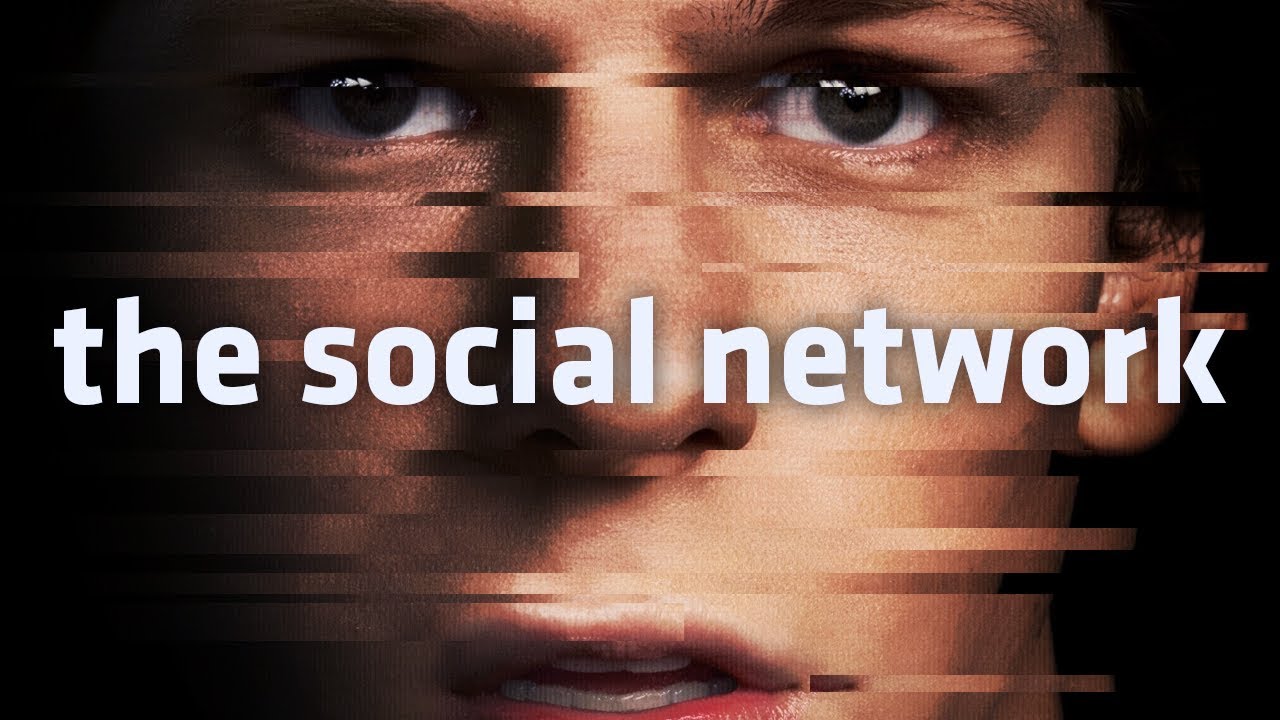
Who will change the world?
Who will change the world? Is it the "Old Money" sitting in the Porcellian Club, sipping scotch in bespoke suits? Is it the socially awkward geniuses who only know how to talk to screens? Or is it someone else?
I give The Social Network a 9/10 not because it's a faithful biopic of Facebook—the real Zuckerberg is far more boring and secular than the one on screen. What Fincher and Sorkin created is an epic war between the New and the Old, the Fast and the Slow, the East Coast and the West Coast. It is a story of how a visionary rides the tidal wave of an era. But more importantly, it is a tragedy: a dragon slayer who, fueled by rage against the establishment, builds a new empire only to become the very dragon he once despised.
The Modern Gatsby
You think this is a feel-good story about a poor genius striking gold? No. It is the coldest exposure of class barriers.
Zuckerberg thought Harvard was the key. He thought his talent would pry open the heavy oak doors of the elite. But the doors remained shut, and the light leaking through the cracks was judgmental. This is the modern Gatsby story. It’s no longer about buying a mansion for love; it’s about building a digital empire for dignity.
As a Computer Engineering grad, I feel a physiological empathy for the Zuckerberg on screen.
I, too, have envied the so-called elite—the Winklevosses of the world. But when you get close, you see the arrogance in their bones. They wrap their ugliness in "tradition" and "gentlemanly conduct." They look at you not as a peer, but as high-end tech support.
In that moment, you hate them. You swear: Screw your Final Club. I’ll build my own. The best club in the world. A club you can’t get into even if you beg.
What is my weapon? Code. The Internet. Those old guys don’t understand what this era of moving bits means. While they row crew and discuss family trusts over brandy, I will use my hands, under the dim dorm lights, to forge my own scepter.
But is this new, rebellious era truly better? Sean Parker is the answer. He is the avatar of the new age: cool, young, stylish, fast-talking, paranoid, and chaotic. He is a prophecy of the world 20 years later—a world conquered by TikTok, fragmentation, and algorithms. Nothing is permanent. Everything is short-term. There is only traffic.
The King of Dialogue & The Tyrant of Visuals
It’s hard to imagine the chemical reaction between Aaron Sorkin, the "auditory" writer whose dialogue fires like a machine gun, and David Fincher, the "visual" tyrant who controls every pixel.
Trivia tells us Sorkin directed the "Face Mash" scene at the beginning—his directorial debut before the masterpiece The Trial of the Chicago 7. But Fincher is the one who haunts me.
When I think of Fincher, I think of a specific texture: sodium-vapor streetlights spilling onto wet, black asphalt. Cold, industrial, yet mesmerizingly sickly. But Fincher is more than static aesthetics; he controls the "tension string." He films conversations like action sequences.
Take the account freezing scene. Eduardo screaming on the phone, Zuckerberg arguing awkwardly with his girlfriend, all set against the backdrop of a burning scarf. The editing is suffocating. And the opening bar scene—99 takes. It wasn't just dialogue; it was a collision of dimensions. Every cut was a shift in power. That is mastery.
The Ghost Ship
The chemistry between Jesse Eisenberg and Andrew Garfield sparked an internet subculture—the "Ghost Ship." It proves how perfect the casting was.
You can't fake that dynamic. One is a genius who avoids eye contact with the world but opens up to you; the other is a guardian who offers warmth but gets stabbed in the back. When Eduardo smashes that laptop in the rain, he isn't just breaking hardware. He is breaking the part of Zuckerberg that was still human.
Hand Covers Bruise
The score deserves its own chapter. It is a match made in heaven between Fincher and Nine Inch Nails’ Trent Reznor & Atticus Ross. Considering their later Oscars and diverse work on Soul and Tron: Ares, their genius is undeniable.
If you love rock or electronic music, you understand the texture. The main theme, "Hand Covers Bruise," is the most fitting melody I’ve ever heard. Simple piano notes struggling to survive amidst a sea of low-frequency static and industrial noise.
It is implicitly angry. It is sad. It is thoroughly lonely. As the story progresses, that melody drifts away. Just like the ambition, the blood, and the innocence of youth. Under the logic of capitalism, no matter how brilliant your algorithm, you are trapped.
He won 500 million friends, but lost the only one that mattered.
Verdict
I first watched The Social Network in high school, seeing only the cool startup vibes. Now, as a graduate stepping into the adult world built by code, I realize it is a moving tragedy.
In the age of AI, we stand at the precipice of another era. We will see many more stories like this. Young coders, dissatisfied with the system, using AI to build their own clubs.
What is their future? Will they slay the dragon, or become it? Staring at the blinking cursor on my screen, perhaps I should ask: What is my future?